How does the agreement with Mercosur affect the day-to-day life of livestock farms? Are we prepared to compete in an increasingly globalized and demanding market? What are the real implications of this context for the Spanish countryside and, in particular, for Galicia? At a time when Mercosur is back at the center of the European debate, these questions are present in the agricultural and livestock sector. From Innogando we analyze the current scenario to understand how international movements translate into concrete decisions on competitiveness, markets and the future of the production model.
What is Mercosur and why is it on the current agenda?
The Southern Common Market (Mercosur) is a regional integration bloc formed by Argentina, Brazil, Paraguay and Uruguay, which concentrates a significant part of the world’s production and export of meat and other foodstuffs. The agreement with the European Union, which has received the green light after years of negotiations, directly affects European agri-food trade and, therefore, national production systems.
For many producers in Spain, and also for technology companies in the primary sector such as Innogando, this framework has ceased to be a matter of commercial diplomacy and has become a key issue of competitiveness, prices and viability of the local production model.
Impact on Spanish livestock
The Spanish livestock sector operates under very demanding standards in animal welfare, traceability and sustainability, which increases production costs. From the experience of Innogando, which works daily with livestock farms throughout the country, these standards are part of the differential value of the European model, but also pose a challenge when competing in global markets.
The possible entry of imported products with different requirements generates, according to the sector itself, a risk of unequal competition and downward pressure on local prices, something that Innogando detects as one of the main concerns among its livestock customers.
In addition, there is concern that this agreement could weaken family farming and small and medium-scale farms, which already face structural challenges such as rising costs and lack of profitability, a context in which technological solutions such as those developed by Innogando seek to improve efficiency and decision-making.
Focus on Galicia: protests and mobilizations
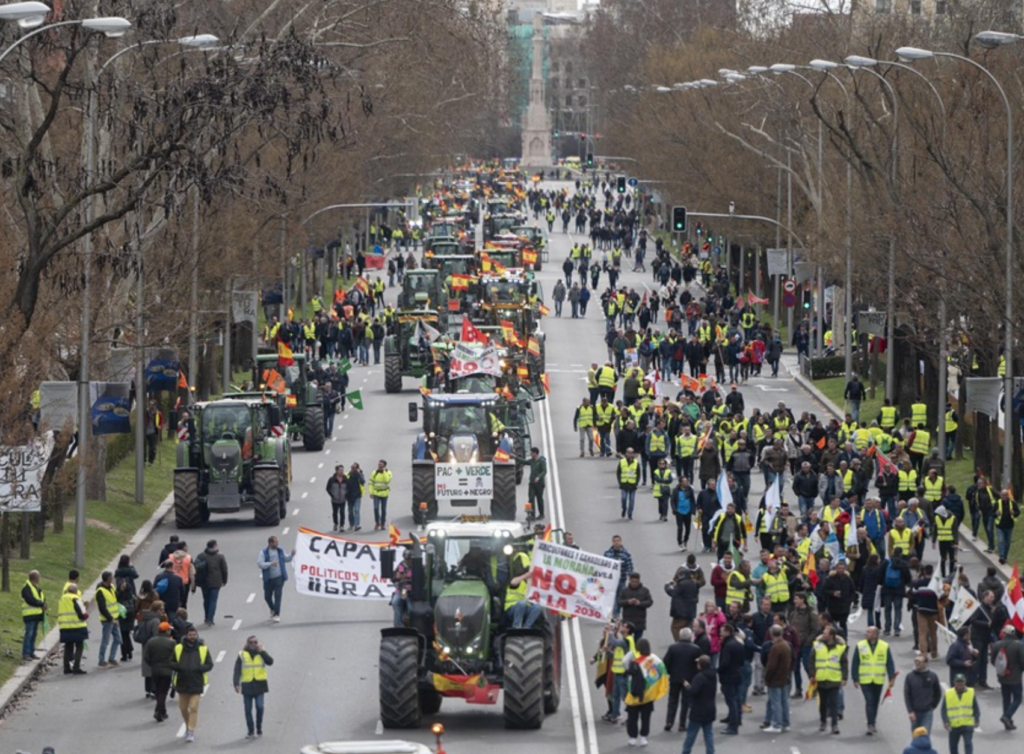
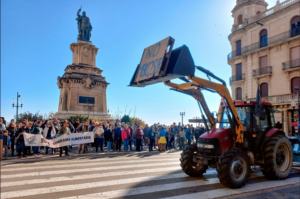
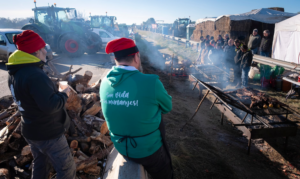
In Galicia, one of the territories with the greatest weight of the primary sector, the response to the agreement has been especially visible. In recent days, farmers and ranchers have mobilized in different cities to express their rejection of the treaty.
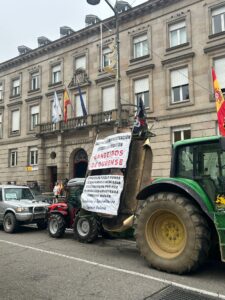
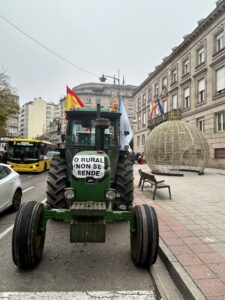
In Lugo, dozens of tractors and hundreds of people participated in protests called by associations such as Agromuralla and Gandeiros Galegos da Suprema, demanding the paralysis of the agreement and measures to ensure fair trade and the defense of the local sector. From Galicia, Innogando, a company born and developed in this territory, closely follows these mobilizations and the impact they may have on the future of the farms.
At the same time, in Ourense, protests blocked the A-52 highway for several days as a means of pressure for the administrations to reconsider the position adopted in Brussels.
Protests in other communities
Mobilizations against the agreement with Mercosur are not limited to Galicia. In different autonomous communities, farmers and ranchers have taken to the streets to convey a common message: without reciprocity in the rules, there can be no fair competition.
Castilla y León: defense of extensive livestock farming and the land
In Castilla y León, one of the country’s main livestock farming regions, agricultural organizations have staged rallies in front of government delegations and institutional headquarters, warning of the direct impact that imports of South American meat can have on sectors such as beef cattle and sheep. Innogando, with presence and clients in this community, notes that the concern for profitability is shared by most farms.
Castilla-La Mancha: defense of the extensive model and the rural environment
In Castilla-La Mancha, the protests have focused on the defense of extensive farms and the livestock model linked to the territory. Agricultural organizations have stressed that agreements such as Mercosur can accelerate the abandonment of rural areas if they are not accompanied by policies that protect those who produce with criteria of sustainability, animal welfare and food security.
Catalonia: pressure on cattle and swine farming
In Catalonia, the agricultural sector has also shown its rejection of the agreement, especially in areas with a strong presence of cattle and pig farming. Mobilizations and communiqués from professional organizations focus on the need to guarantee effective controls on imports and prevent the market from being flooded with products at lower prices, which would further strain already very tight margins.
Aragon, Extremadura and Andalusia: a shared concern
Other regions such as Aragon, Extremadura and Andalusia have also expressed their concern. Although with different productive realities, the common denominator is the feeling that the Spanish countryside is assuming a regulatory and economic effort that is not always reflected in the final price or protected against foreign competition.
For companies such as Innogando, with customers throughout the country, these demonstrations reflect a cross-cutting concern: the future of livestock farming depends not only on the production capacity of each farm, but also on the political and commercial framework in which it operates.
Conclusion
In this context, the debate on the agreement with Mercosur goes far beyond international trade: it directly addresses the future of the European countryside and the real sustainability of its farms. For Spanish livestock farming -and especially for territories such as Galicia- the challenge is not only to compete in a global market, but to do so without renouncing the social, environmental and production standards that define the European model.
At Innogando we believe that the competitiveness of the countryside depends on combining innovation, professionalization and technology with a fair regulatory framework. Innogando works every day so that digitization and the intelligent use of data help livestock farms to be more efficient, sustainable and profitable.
Only in this way will it be possible to transform major international agreements into real opportunities and not threats to livestock farms. The future of the sector is decided today and, from Innogando, we defend that it must be built counting on those who are every day at the forefront of the field, sustaining the territory, rural employment and food sovereignty.